Friday, October 7, 2016

Oral History Theory

In her book, Oral History Theory,   Lynn Abrams describes the practice of oral history as a method of research that is distinct from other historical endeavors due to its collaborative approach in which the researcher must instigate and lead interviews and from these interactions, historical documents are created. In other words, oral history is unique in that it forces the historian to, in some cases; interact with their subject in a personal way which is beyond the level of other fields. Oral historians go out and look for interesting people as opposed to documents and analyze each person’s personal memory of the past. It is an effective approach to studying history because the interviewer has the ability to ask their subject any question they want and get an answer in return. With documents, the historian obviously has what is offered to them and cannot manipulate the information they receive in the same way. When I refer to this manipulation, I am referring to the fact that the historian can ask any questions they would like and phrase the questions in a way which will hopefully get them their full response.
According to Abrams, you can study a group or an individual and learn from their previous experiences they may not have been documented and each interview is the result of a dialogue. According to Abrams, the interviewer must keep in mind that “subjectivity and intersubjectivity are present in every interview.” Just like interpreting anything else, the interviewer must keep in mind of the subjectivity of their subjects and take what they learn with a grain of salt. Like everything else, each person you might interview will answer your questions and participate in the interview process with a touch of bias whether they do it on purpose or not. One of the things that will affect the content of the information you receive is whatever cultural background the content of information comes from. Abrams also reminds us that the oral history document is the result of a three way dialogue: “the respondent with him or herself, between the interviewer and the respondent and between the respondent and cultural discourses of the present and the past.”
In her book, Lynn Abrams introduces us to a multi-step interview process for conducting an oral history interview:
                -the original interview
                -recording of the interview
                -transcription and interpretation of the interview material
Abrams makes the argument that the interviewer will want to be as precise as possible when transcribing the interview. It is not beneficial to record the information as the historian receives it because everything is interpreted differently by different people. The speaker’s rhythms of speech, dialects and sentences are important in conveying their meaning. To back this up, Abrams says “unless the sheen of social science was added to the oral history practice, including the careful and accurate transcription of interviews and faithful representation of the spoken voice, then the method was depicted as literary and creative rather than as historical and reliable.” In summary, it is not the historian’s job to interpret what they heard but to record what they heard for other to interpret the meaning themselves.
                Abrams does not that sometimes there are exceptions to that rule. For example, when she was conducting an interview of people from Shetland Island, she noted that their vocabulary was almost incomprehensible to her and it was necessary to make some slight edits to the meaning wouldn’t have been completely lost. While speech patterns are incredibly important, if they hinder the historian from obtaining the full meaning, it is acceptable to make some edits which are in itself, not a simple task.    Another important part of the interview process is making a physical observation of the speaker. “In the interview itself some quite concrete signs are read by either side: dress, accent, demeanor and body language provide signals which are interpreted by both parties. Respondents may also communicate their attitude towards the interviewer and the interview process by the preparations they have made (or not).”  Additionally historians must approach their interview with “openness” and let those that they are interviewing ultimately determine the direction of the project.

                Ultimately the role of oral historians is to decode data and establish a connection between individuals and general narratives, personal and public experiences, and the past and present. Abrams mentions a study by Allesandro Portelli in which he privileges the names of the interviewees over the historian because the speakers are the ones that are creating the history while the historian is there to write it down and maintain it for the future.

Monday, October 3, 2016

Celebrating the Revolution with...socks?

 “For many years colonial pageantry was limited to a few cities…but 1976 has changed everything!” According to American Legion magazine “…10,000 or more Americans are ‘dressing colonial’ every weekend.” The bicentennial became the year that Americans would try to figure out what the Revolutionary generation and that event in history meant to them. For Robert and Vincent DeForrest of the Afro American Bicentennial Corporation, they “…had experienced the revolution in their own lives. Weknow is it is a continuing thing. And we believe much of the leadership for continuing the American Revolution in recent decades has come for Black Americans.” As opposed to America’s centennial, a lot more people had reason to celebrate being citizens of the United States of America. Since 1876, women had gained the right to vote and African Americans were in the midst of battling for their own civil rights. This appeared to be the perfect time to celebrate the birthday of this country. “…expressions of commemoration reflected a new cultural emphasis on the individual and his or her role in society and several recent changes in American society merged with an emphasis on the self to make historical commercialization newly acceptable.” (9) What is “historical commercialization”? What is the best way to “sell history”?
1976 marked the 200th anniversary celebration of the signing of the Declaration of Independence and what better way to have celebrated than paper towels, t-shirts, and Frisbees? Dr. Crepeau’s collection of Bicentennial Junk is a perfect example of what Tammy Gordon refers to in her book: “The Spirit of 1976: Commerce, Community, and Commemoration” as the effects of a ‘buycentennial sellabration” (6) that seemed to rage in the first half of the 1970’s. The Bicentennial celebration was a perfect time for consumers to “sell “history as “commercialism quickly became a central feature of the meaning of the celebration.” (54) This had been attempted a decade before during the centennial anniversary of the Civil War; however, Confederate flag images did not just have that certain appeal for most Americans. The American Revolution and the imagery that came along with was an excellent opportunity to make history “junk” appeal to the majority of Americans, “…marketers and retailers challenged the sanctity of American history…by putting founding myths and symbols on such ephemera as paper plates and grocery bags.” (3) It turned out that for many corporations and even the federal government that the American Revolution was about to have a major impact on the American economy once again. In order to make the effect and appeal to most Americans, images of George Washington and Thomas Jefferson (slave owners) were used to appeal to white consumers while images of Crispus Attucks (African American Revolutionary war figure) were used to appeal to black consumers. “The sellabration drew on longstanding ideas about the American Revolution but repackaged them for different consumer demographics.” (65)
For major companies such as the Franklin Mint, McDonald’s and Disney, “…the bicentennial was that….’an opportunity, not only for America to support the Revolutionary spirit abroad in the world, but to lead the way once again in the struggle of people against systems of exploitation and oppression.” (ABC 2).
It is at this point where I will talk about one of the items in Dr. Crepeau’s collection: the Mickey Mouse/Paul Revere socks. As someone who has been part of this corporation myself for around six years, I know that the Walt Disney Company will use every opportunity afforded them to make a profit via consumer goods and the one image that may sell even more than the Revolution in Mickey Mouse. This and other products released by Disney during this celebration was a perfect example of how marketers tried to make the American Revolution appeal to more than just white people or historically interested people. Including popular non historical figures ups the appeal and makes the product acceptable for people of all colors, backgrounds and ages. It is a product that any American could wear and show their support of the bicentennial even if they just bought it because of the cartoon character included on the socks. This would be a good product to include because it is relatable and it might be something that people still have. More than likely the burger wrappers and newspaper ads and soda cans will more than likely have found their way to the garbage by now; but these socks might still be available to most Americans and it is something that comes out of the Bicentennial celebration that Americans can still relate to.


Saturday, September 24, 2016

The Presence of the Past

In their work, Presence of the Past: Popular Uses of History in American Life , authors Roy Rosenzweig and David Thelen make the argument that historians often find themselves in a separate group from those that do not study history professionally due to the “present public ignorance of our cultural heritage.” To try and prove or disprove that theory, the book by Thelen and Rosenzweig studies how the typical American views the past through a series of surveys. The end result of the surveys showed that the typical American does try and engage with the past as much as possible.
The results of their surveys were as follows:
- More than 4/5 of those surveyed had taken photos to preserve memories
- 3/5 had visited a historical site or museum
- -2/5 had worked on hobbies related to the past such as genealogy
To these “popular history makers” it was decided that family and personal past is what matters to the typical American the most. And this is something, I believe that is becoming more and more popularized with enterprises such as Ancestry.com or various TV shows dedicated to studying genealogy. I believe this trend will only continue to grow as more and more Americans are taking several hundred pictures a year of their families. That specific statistic isn’t stated in the book; however it is supported.  A majority of those that were surveyed take pictures to preserve memories and about ninety percent enjoy looking at old family photos.
In a separate survey, Thelen and Rosenzweig asked how connected to the past each person felt. It is true that less than a quarter of those surveyed felt like they had a special connection to United States history. The larger majority felt that they felt a connection with their personal past such as ethnic group.  This seems to be in direct correlation with those that expressed their connection with family past and their experiences going through family photos and studying genealogy. An example of this from the book is of a man with African American ancestry in the south who felt a connection upon meeting his future wife via their shared experiences in growing up in the south in the 1950’s.
In their third survey, the pair tries to discover what types of “past” average Americans find to be most important. Again, like in the previous two examples, people for the most part chose the past that affects them directly using pronouns such as “we” and “our”. It appeared that many of the non-white groups that were surveyed had a more direct appreciation of their particular past. One Native American woman mentioned that her past and identification as a Native American made up who she was and helps develop her culture. She stated: “If we lose our culture then we cease to be Indians.”
As a result of their endeavor, Rosenzweig and Thelen can claim that they were able to prove several things. First off, historians who believe that they were in a separate group from the average American was correct in some degree. Many Americans saw “historian history” as something focused on famous people and events and something that they focused on in school and didn’t feel the need to put much thought into. (Of course this wasn’t every  American). However, the assumption that the average American does not put much thought into the past is absolutely not true. Those Americans who identify with their culture, spend hours attempting to reconstruct their family history on Ancestry.com, and reminisce while cleaning out their grandma’s attic are taking a very personal look into the past which they can’t get from school or from historians.
It is of my personal opinion that as we are becoming more and more adept at capturing memories through photographs and find more convenience searching our family records through the digitization of those records the average Americans’ relationship with the past will only continue to grow.
Thelen and Rosenzweig also successfully prove the point that just because a memory does not include Robert E. Lee and the Battle of Gettysburg; doesn’t make it any less important or any less a part of history. As a teacher to students who weren’t born until 2002, my personal memories and recollections of what happened on September 11, 2001 are just as valid of a historical narrative as teaching them the names of the government officials who were there. My personal memories of September 11th and my grandma’s recollection of the JFK assassination or her father’s recollection of Pearl Harbor will not be found in any history book or recounted by any historian; but that doesn’t mean it is not reflective of the “presence of the past” for the average American.

Questions to Consider
1. Is it possible, from a public history standpoint, for our personal histories to have meaning for people outside our families or ethnic group?
2. What did the Native American woman mean when she said “if we lose our culture we cease to be Indians?”
3. How important is memory in maintaining the past?

Wednesday, September 21, 2016

Public History project


For my public history project this semester, Zach and I will be working with Dr. Gannon to create panels supporting the Lone Sailor Navy Memorial in Blue Jacket Park.  According to the website for the city of Orlando, the Lone Sailor “is meant to inspire today’s youth and honor sea service men and women and their families; past present and future. The memorial will help to convey our appreciation to the men and women in the US Navy, Marine Corps, Coast Guard and Merchant Marine who voluntarily put their lives in harm’s way.” The purpose of having the memorial in this specific location is because it used to serve as the Orlando Naval Training Center.
 Those that funding the project (The Navy League) need assistance in creating panels that demonstrate to viewers the training process that Navy men and women go through. Dr Gannon also mentioned to us that they are interested in including audio with this memorial. For example, they would like to include a button that you can press and hear a service-person give their testimony on the training process.  One of the UCF stakeholders that may be invested in this project would be RICHES and our community partners would be the Navy League and probably even the city of Orlando who support this project. We plan on using mostly primary sources for this project. I believe mid-October we will have the opportunity to interview several servicemen and women who served in Orlando while they are in town for a reunion. Dr Gannon also shared with us that the UCF has several tapes of recorded testimony. As far as secondary sources we are going to attempt to use the resources located in the UCF Library as well as the historical society to research the role that the Navy Recruitment Center played in Orlando.

I do not know if we will be able to accomplish the audio component of the memorial that the Navy League is interested in; but hopefully we will be able to complete the panels for the memorial in Blue Jacket Park. 

Sunday, September 18, 2016

Understanding Jim Crow

Understanding Jim Crow

In his book, David Pilgrim discusses how his habit of collecting racist memorabilia has turned into something much more.
With his collection, Pilgrim helped establish a museum exhibit on the era of Jim Crow through paraphernalia from the age. Initially, Pilgrim refers to his hobby as collecting “racist garbage”, a hobby that he began as a teenager. As someone who is partially African American himself, he felt inclined toward these objects even though they made him feel uncomfortable enough that he was happy to eventually part with them and donate them to the museum. He acknowledges that it was an unusual feeling for a collector to have about his collection.
 When Pilgrim was starting his collection, acquiring these items was a lot easier to do than it would have been for someone today. Perhaps a reflection of the changing times? Or hopefully Americans are becoming more embarrassed by our history of “Mammy” salt and pepper shakers and cartoons of black children eating over-sized watermelons.
 In the first section of the book, Pilgrim tells us about his personal background and why he had the collection, what it meant to him and how he came to establish the exhibit at the university at which he worked. He notes that his teachers and professors have never failed to mention the achievements of men like Frederick Douglass or W.E.B. DuBois so it wasn’t as if African Americans had been completely passed by in history class; but he raises the question of why he never heard any of his professors discuss the average African American. Pilgrim also acknowledges that most Americans know that slavery was not good and that it happened and now it’s over and that the civil rights of movement of the 1960’s took place and it happened and now it’s over.  What doesn’t even seem to get acknowledged is the traumatic era in our history known as “Jim Crow” which took place in the hundred years between the end of the Civil War and the beginning of the Civil Rights movement. So if it’s not being discussed in our schools, how can we make it available to students and their parents and encourage people to have an open discussion about this dark period in our history where blacks were being kept from expressing their constitutional rights and being murdered in large numbers. That’s where Pilgrim’s racist collection comes in.
Pilgrim expresses that the purpose of his exhibit is to “continue the journey towards understanding and improving race relations,” despite the fact that many people are unwilling or even afraid to take a good long hard look at our racist past (and present due to the fact that Pilgrim is constantly updating his exhibits with memorabilia surrounding the Trayvon Martin case and the 2008 election of Barack Obama).  Pilgrim is essentially a scholar was has become an activist in his attempt to encourage average Americans to discuss race and prejudice towards African Americans. There is something inherently different about reading the statistics on lynchings in the South and staring at a photograph of a white man standing beside a black body; or how the white man’s view of African Americans was created not from personal experience but from cartoons and depictions that they saw of blacks in movies like Gone with the Wind or Aunt Jemima or even whites portraying oafish blacks in minstrel shows by painting their skin with pitch black grease paint. How could any white person take blacks seriously when all they knew of them was Mammy and the lazy black “coon” being portrayed in the minstrel shows around the country? Exhibits like Pilgrim's force people to come face to face with pas they may not have even known existed. It’s a lot easier to ignore text that it is to ignore the hood of a member of the KKK staring at you in the face or a recreation of an auction block used to sell slaves and destroy families.
I believe that the biggest difficulties for exhibits like this and the new museum on African American history and culture opening as part of the Smithsonian later this month is getting a non-black clientele to come and experience what the exhibits have to offer. In regards to the Smithsonian,  it was built for all Americans to come in and experience African American history as a core part of American history; however, as Pilgrims mentions several times in his book it is difficult to get people to want to talk about or acknowledge their roles or the roles of their ancestors in these atrocities. People are more willing to go and visit the National Holocaust museum because they can distance themselves from the perpetrators of those atrocities and say how terrible the Germans behaved while also turning a blind of the United States’ treatment of both Japanese and African Americans in their own country during the same period.
Hopefully more and more of these exhibits will appear across the country as we try to become more comfortable with talking about our own issues with race and we will be able to confront a replica of an auction block in the Smithsonian or racist “trash” in the Jim Crow Museum the same way we and have an open discussion about it and feel comfortable with addressing ours sins and educating ourselves and other generations about the darker parts in our history.
Questions to consider:
1.       How can memorabilia be interpreted as truth?
2.       Can racist memorabilia effective serve a non-racist purpose?

3.       Can relics from the past help us discuss the issues of today?

Sunday, September 11, 2016

Private History in Public

In Tammy Gordon’s book, Private History in Public, she emphasizes the importance of museum exhibitions both large and small all around the country. She organizes the various museum exhibits into several different categories:
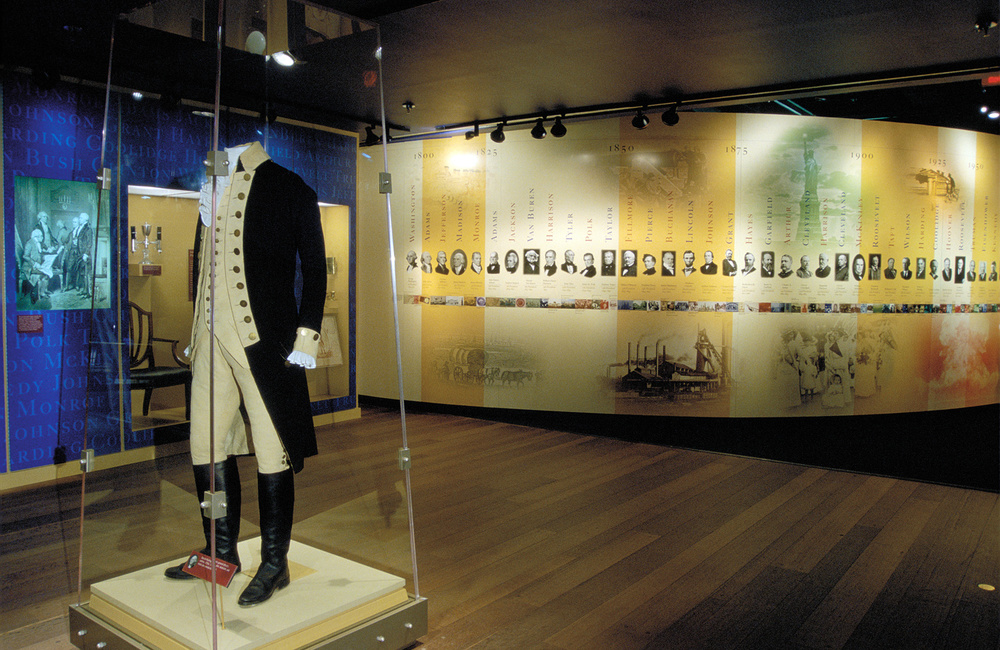
            Academic: sponsored by government or corporate donors where the exhibit is highly managed to determine how the public will see it. An example of this would be almost any exhibit at the Smithsonian. As an example, I included a link to the Smithsonian Museum of American History’s exhibit on the American presidency.  http://americanhistory.si.edu/exhibitions/american-presidency This exhibit is sponsored by the US government with donations from government officials, etc. and the purpose is to tell a story of a uniquely American role that was filled by great men who were also average Americans. You can look at some of the items in the collection online; but when you go and see the exhibit in person, there are no negatives spins on any individual represented to be found anywhere. This fits in with the character of an academic exhibit which as Gordon reminds us “regularly stress traditional historical subjects like the affairs of nation states and change over time.” (20)

            Corporate these exhibits are sponsored by a corporation (as can be seen by the name) to market a particular interest. The average museum goer usually would not think of a museum exhibit as attempting to make them purchase anything or do much other than inform them of the history of their company organization. However, the best example that I can think of (which Gordon discusses briefly in the book) would be the World of Coca Cola in Atlanta, Georgia. The reason I decided to use this example is because I have been to this exhibit and I can attest to the success of the corporate goal of getting museum consumers to purchase and support this company’s product. After three floors of this museum which include the history of their company through pop art, artifacts, etc I found myself very eager to purchase a coke by the time I had seen everything. https://www.worldofcoca-cola.com/explore/explore-inside/explore-milestones-refreshment/


            Community exhibits are the type which come in the most varieties and are usually produced by people who have close ties to the subject matter being presented. The curators of these exhibitions usually tend to promote their local heritage. This type of exhibit is one that Gordon discusses very extensively in her book because it is the type that is looked over the most often by the general public. Gordon defines this exhibition as one which is often “motivated by people who have been historically ‘othered’, people whose histories are told by those outside the community… [it is] one way to claim local control over heritage resources and to assert sovereignty.” (40) My own personal example of one of these would be the heritage museum in Hendersonville, NC http://www.hendersoncountymuseum.com/ which tell the story of North Carolinian’s involvement in every war from the American Revolution on and contain artifacts that were donated by members of the community

            Entrepreneurial exhibits “merge trade history with personal history” (25)  as well as “reflect the traditional role of small business as well as the role of the small business person as one who is committed to and reflective of the community.” (60) One of the examples. Gordon included was Chicago’s International Museum of Surgical Science which features several exhibitions not only on surgery but also with subject matter that attempts to go outside the role of a traditional academic exhibit on the history of surgery. The museum differs from corporate and academic museums by presenting its theme in a “endearingly rustic, almost crude, in a cobbled-together way..” which includes items such as Laura Splan’s drawings in her own blood (63)
            Vernacular are even more difficult to pinpoint than community exhibits because they are usually integrated in non-museum settings which require neither the “curator nor the visitor [to] break from the activities of daily life in order to experience the display.” (77) Since these are usually hard to come by, I decided to include a personal example. The town that I used to live (Hendersonville, North Carolina) has a turn of the century pharmacy turned cafĂ© in its downtown district. For purposes of brevity, I have included the link so the reader could learn more about the history of the establishment themselves. http://mikesonmain.com/about However, what I enjoyed most about the restaurant is their walls still contain artifacts from when the building was used as a pharmacy in 1900 as well as when the store front was used as a soda fountain around the 1950’s (the first of its kind and the only one still operating in Hendersonville.) Below I have featured images from the restaurant. I wasn’t able to find the small exhibition they have with the turn of the century medicinal supplies, however.


. I believe Dr Crepau’s exhibit on the bicentennial would fit in with his category nicely. I was considering it a part of the entrepreneurial exhibit; but settled on this own to be the more appropriate example due of a community exhibit due to the fact that it presents a representation of everyday American life in 1975. It doesn’t really represent a group of others but it tells a story of the American people and how they celebrated the country’s bicentennial. Because there is no government or corporate sponsor that story is being told by Dr Crepeau and the members of the UCF community. However, Dr Crepau’s artifacts which will be encompassed in the  Art in Odd Places event puts the exhibit into the vernacular category due to the fact that it will be presented outside of the traditional museum space and will not force any viewer to break from daily life in order to view it. 

Questions to Consider:
1. Is it possible for a museum exhibition to fit in more than one of the categories introduced by Tammy Gordon?
2. Can a museum exhibit still be considered vernacular if a spectator goes out of their way to view it?
3. Do all of these examples of exhibits still try to sway the view of a spectator?

Thursday, September 1, 2016

The Living Archive

So, what is an archive exactly? How can you define something so diverse?
Archives are a “site of knowledge production’, they are the “arbiter[s] of truth” and can be used as a “mechanism for shaping the narratives of history.” (2) Some historians even believe that almost “everything” can constitute as an archive from documents to memory, to oral histories, to music. It is also important to remember that an archive is not the unbiased selection of facts that everyone might assume them to be.
The title of the work, Archive Stories, might be a good place to look to understand what archives are.
Who knew that an archive had a story to tell? Archives are “figured” and their relationships with the past will usually be linked to the archivist or the institution that is given the task of deciding what is important enough to include and what can be left out. In the section written by Craig Robertson, he notes that archives can go through a process of historicization (71) which simply means that each archive has its own story to tell. Archivists use their power to exclude and include to write whatever story it is that they would like to tell which is why “scholars who use archives need to critically analyze not only documents but also the institutions which house them.” (77) Such as is stated in the selection on Mr. Peal’s archive: “Our archival stories should not only recount our work with certain bodies of evidence in particular spaces, but should also record our own political concerns and intellectual preoccupations at the specific moments in which we read, transcribe, paraphrase, and ponder source material.” It is important to keep in mind that an archive will not provide the researcher with everything that they need, it is merely tool to use on a very long journey of creating history. As Ann Curthoys reminds us: “The historian’s proper role is to step into the shoes of the past, to explain what people thought they were doing…” (357)
One archive tool that I enjoy utilizing myself is the digital archive. Now that more and more archives are becoming accessible to the public after becoming digitized, it is more important than ever that the researcher keeps in mind what story they are being told and whether or not that fits in with their own version of history. According to Renee M. Sentilles, the digital archives are making it easier for the historian to determine where their information is coming from because the digital archives “raises the demands on historians to read, analyze, and incorporate vast quantities of documents and information…” (145)  More and more historians should be tempted to take advantage of the wealth of opportunities afforded to them online. Right now, anyone who wants to can access JStor and browse through hundreds of periodicals and well organized pieces of data without leaving their home.  “History is about how the past is alive and active in the present, and never is that more clearly illustrated than on the Web.” (147) So-called “amateur historians” can use this is a great opportunity as well. How many amateur historians and genealogists sit at home instead of the library pursuing Ancestry.com? For those who have not used Ancestry before, it is a great tool full of digitized records. My favorite is the accessibility of the records, the key words that I can use to search, and the transcription that comes with many of the documents. You offered a wealth of information through this digital archive that prior any researcher would have had to travel from library to library looking through physical archives. I personally enjoy using the census collections available to find a wealth of information about whomever I am conducting research on. You can access name, date of birth, occupation, family, language, etc. It is also perfect for studying a community over time. Most of the work I can do from computer and it’ll record everything I need for me. Digital archives are incredibly beneficial for the user. However, just because the digital archives offer ease, it doesn’t mean that we should focus primarily on this; but they are a perfect place to “begin and end the research journey.” (155)

Questions to Consider:
1.       How can a researcher decide what is reliable information? How can they make themselves aware of what is being omitted?
2.       What is the importance of understanding the “biography” of an object?

3.       What traits can an individual have that make them a living archive?